MY INTERVIEW WITH AUTHOR KATHRIN HUTSON
- What’s your name and what genre would you consider your books to be?
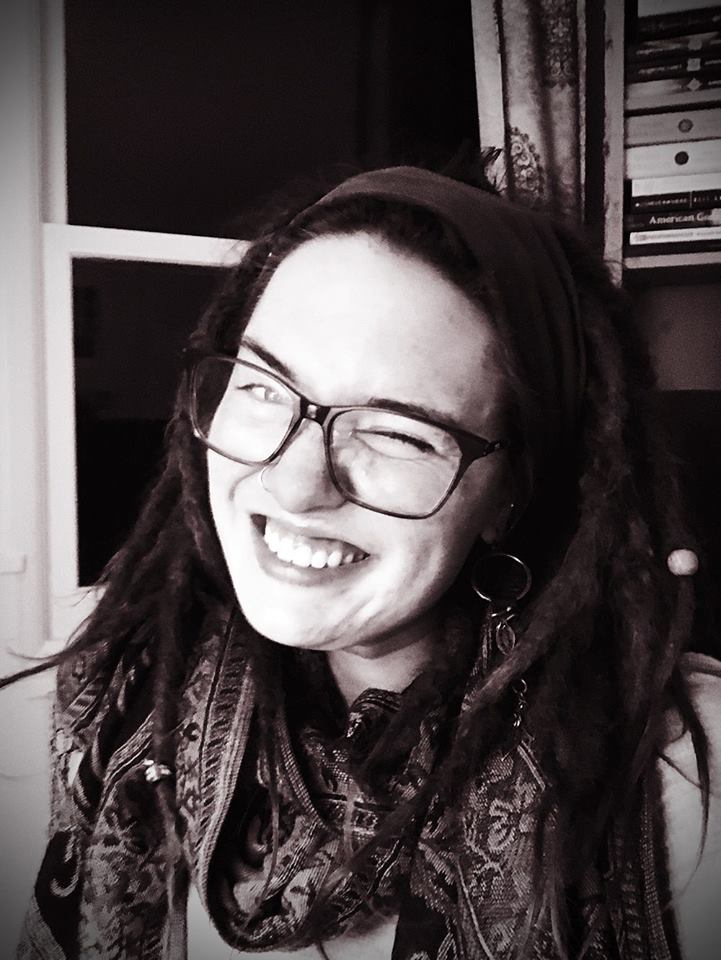
My name is Kathrin Hutson, and I write primarily Dark Fantasy, though I do also dabble in Sci-Fi and Speculative Thrillers.
- Tell me about your book. How did you come up with that (story, angle, idea)?
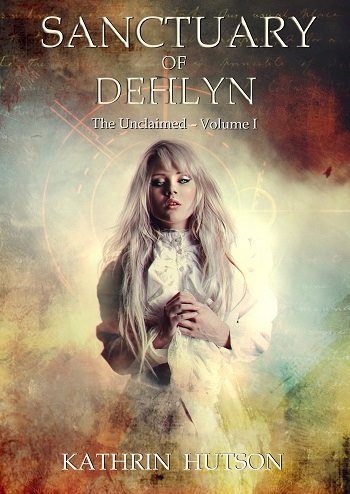
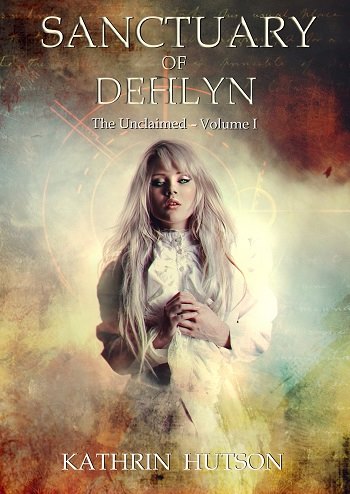
Sanctuary of Dehlyn, Book 1 of The Unclaimed trilogy (and the entire trilogy) was actually my first attempt at writing not to the purely adult market but in New Adult Dark Fantasy. It’s a coming-of-age story for the main character, Kherron, who spent his entire life as a highly indentured servant working the forges at the Iron Pits. His story opens with his first day of true freedom, where everything he thought about the world beyond the Iron Pits is completely turned upside down. He becomes the center of a massive power struggle between two immortal factions of terrifying guardians and the humans fighting them too—all for the same thing. And when the woman-child named Dehlyn reveals herself to him in her ancient, omniscient, otherworldly form, Kherron is drawn into an unbreakable vow to protect her at all costs, just before she’s taken from him.
I can’t remember exactly how I came up with the very basis of Kherron’s journey at the start of Sanctuary of Dehlyn, but just like every book I write (I’m a pantser), the ideas shoved themselves upon me as I just kept writing. I will say, though, that Dehlyn’s character was first inspired by the track “Hello” on the Fallen album by Evanescence. The first time I listened to that song was in high school, and the idea for Dehlyn’s character stuck with me until I sat down to finish writing what became The Unclaimed trilogy over ten years later.
- How did you get interested in writing this particular genre (historical novels, mysteries, sci-fi, children’s books, etc.)?
Fantasy has always been my love. I dove into it when I was a kid, quickly progressing to more adult Fantasy that didn’t revolve around kids entering new worlds and becoming their heroes. I discovered my love for the dark variety first in Phillip Pullman’s His Dark Materials series. A lot of awful, gruesome things happen in those books, which I ended up craving more of instead of thinking it was too much.
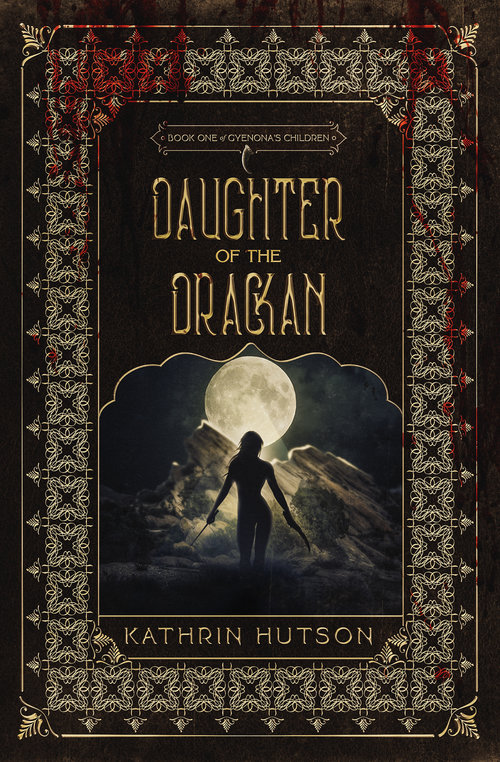
Then I poured all my fondness for Dark Fantasy into my first novel, Daughter of the Drackan, and realized that this was where I truly excelled. My happy place, so to speak. I believe there’s a lot more light to be shed when there’s nothing but darkness first, and I like to take my characters and their struggles into the deepest, blackest pits before seeing how they manage to claw their way out again. Sometimes, they don’t. Sometimes, they make it out barely in one piece. Sometimes they triumph. That’s up to them.
- Do you have a favorite book out of this series?
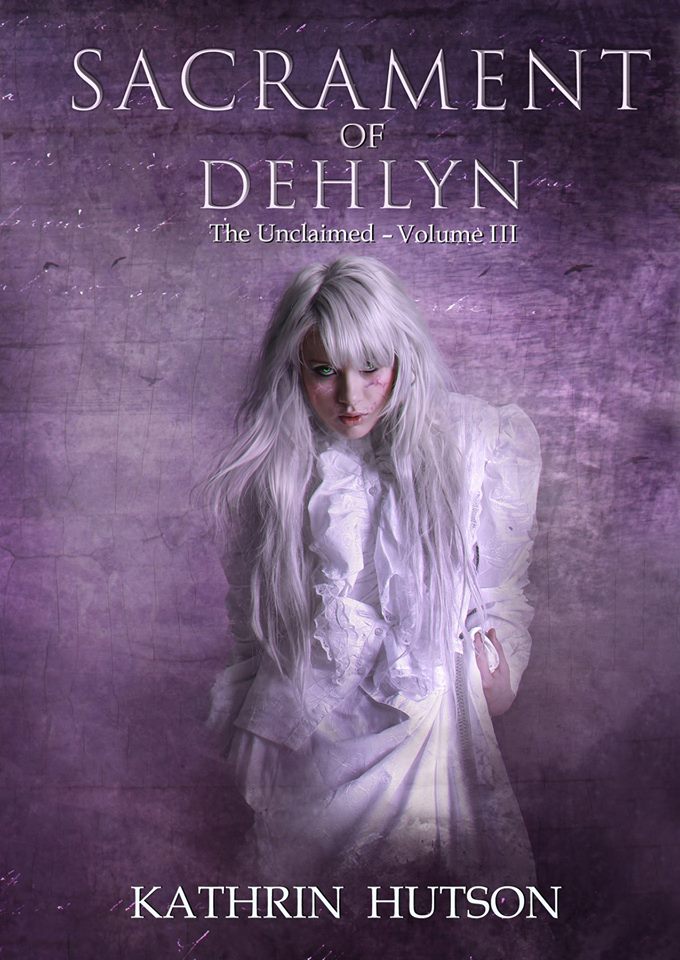
I think my favorite book in The Unclaimed trilogy is Book 3, Sacrament of Dehlyn. It’s definitely the darkest of the three, so big surprise that it’s my favorite, right? I also love it because Kherron gets a little bit of a break in this book with a second love interest, which ends up being the solid foundation he can actually lean on after discovering who—and what—Dehlyn really is and doubting whether the things he ever felt so strongly for her were even real. I fell in love with the character Aelis, this second love interest, the minute I introduced her to Kherron’s story, which wasn’t planned at all (again, I’m a pantser). But she’s fierce, brutal, guarded, damaged, and still full of so much compassion. Kherron really needed that by the time I got to Book 3. And Aelis is the first person who doesn’t speak to Kherron in riddles, who tells him what he needs to know, and who acts as his guide without slipping through his fingers whenever he needs her most.
So despite all the darkness in this third book and no real happy ending, there’s still hope for Kherron and Aelis, for the Nateru and the Blood of the Veil. They just have to keep working toward it.
- Was it always meant to become a series?
This was definitely not always meant to be a series. I always thought it was just going to be a standalone novel, all on its own, until I wrote the third-to-last chapter. The minute those last words sat on my computer screen, I had this overwhelming certainty that this was the end of the first book. Just the first! I had to write more! And that Kherron’s story was so much bigger than I’d ever anticipated. That’s one of the reasons I love writing so much, and why I’m a pantser. I’m constantly surprising myself with all the changes of the plot, the new characters I never planned to create, the twists and turns that present themselves and then resolve themselves almost without me having to think about it.
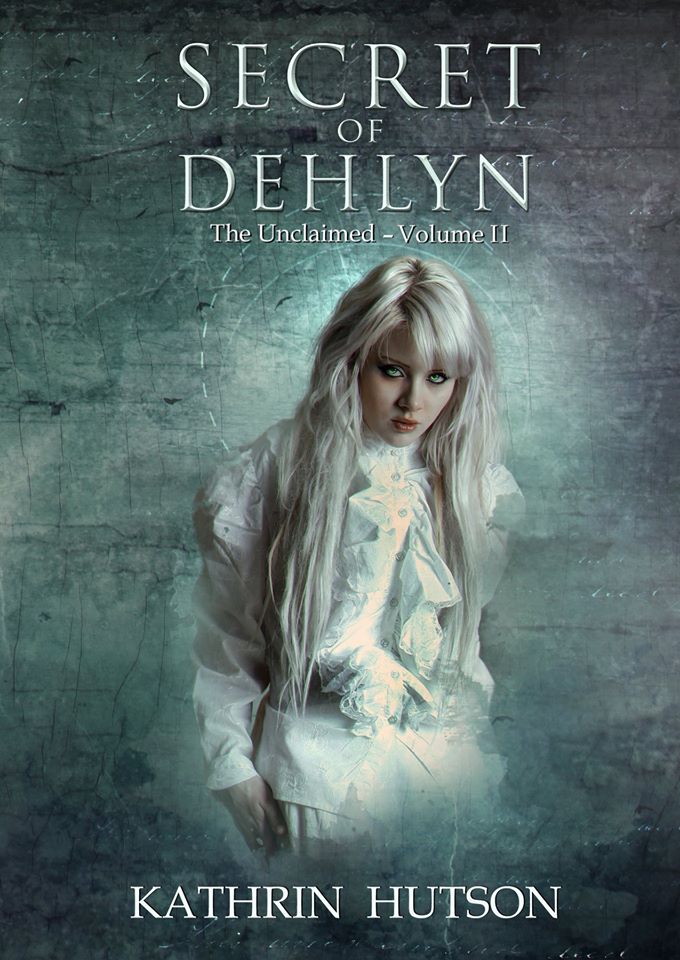
Of course, I couldn’t end Sanctuary of Dehlyn where I’d originally thought, either. It still didn’t have a completeness to it. So I added the last two chapters (which had actually been the first two chapters of Book 2, Secret of Dehlyn), and that rounded it out quite nicely.
- What’s a typical working day like for you? When and where do you write? Do you set a daily writing goal?
Well, I wake up at 3:30 every morning to get a jumpstart on my day. I used to be a serious night person, working the late shift in restaurants from 6 p.m. to 2 a.m. That changed when I quit waiting tables four years ago to work full-time in the literary realm. That started with my freelance editing company, which grew into so much more than I’d ever imagined.
So, 3:30 a.m. I’m up. Every day. I make coffee, of course, then write for 2.5-3.5 hours, and then my toddler is up and at ‘em! On weekdays, we have a part-time nanny, and between her, my early-morning hours, and my daughter’s naps, I get somewhere around 50 working hours Monday through Friday. Probably 80% of that is spent on actually writing fiction. I also have editing work, marketing, promotion, etc.
I do write full-time now, which is my greatest dream come true. I also ghostwrite fiction in a wide range of genres, so I’m working on my own books and those for clients as well. Anything over 5,000 words a day is an okay day. I like to shoot for 6,000-8,000 words, if I can. Sometimes, my schedule does weird things to my goals. But I average about 5,000 words a day, and I write every single day. Even on the weekends.
I’ve had a home office for years, and this is where I write. It’s also the only room in my house (with a two-year-old, two eighty-pound dogs, and a husband with slightly different decorating tastes ha!) where I reign supreme! All my work stuff, all my physical book copies and my bookshelf of fiction, and I’ve got a standing desk with the most fantastic support mat to stand on. Basically, I step into my office, and it’s go time. Nobody else really spends any time in here, which is one of the things that really helps me get in the zone and write for hours on end.
- Do you have a new book in the making and if so, what’s the name of your upcoming book?
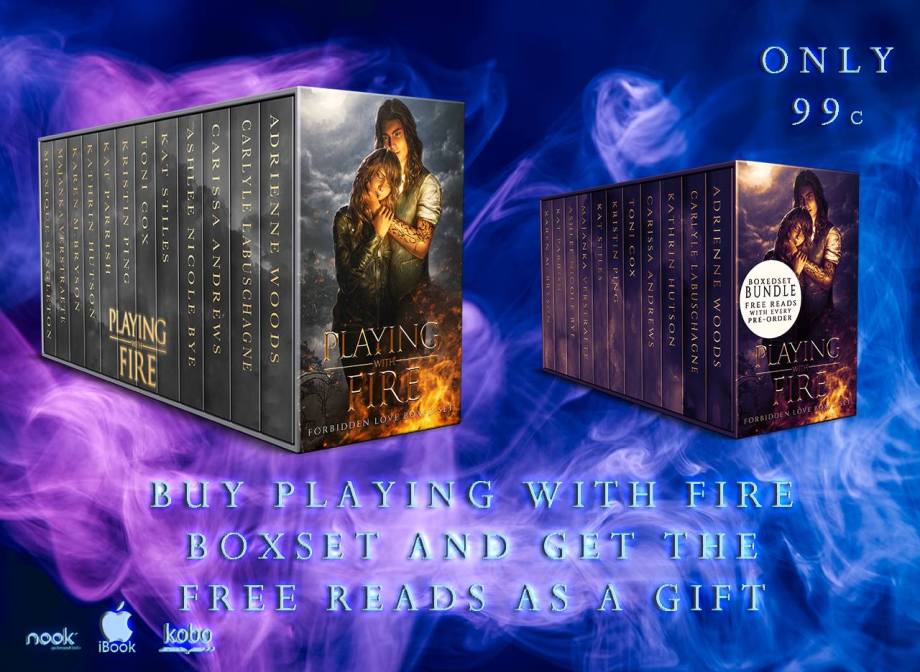
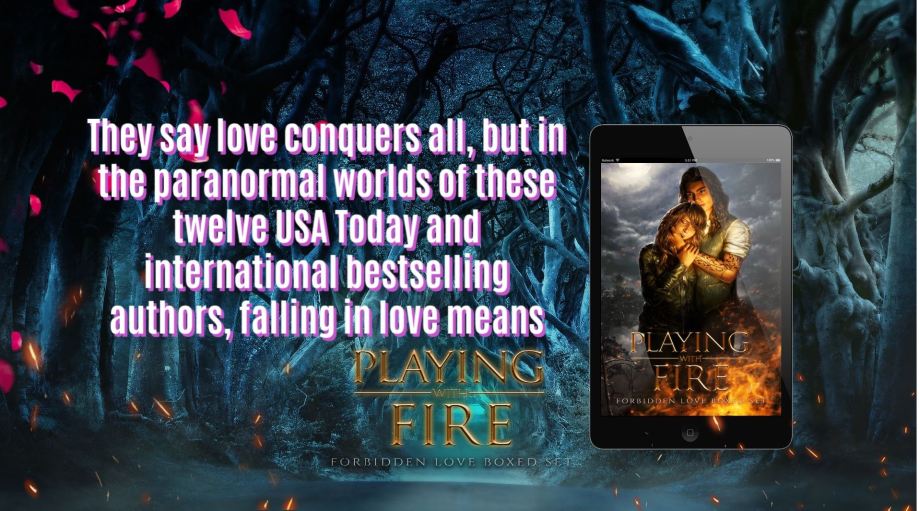
Yes, I do! I’m currently working on a new Dark Fantasy series, Vessel Broken. The first book in the series is titled Imlach Fractured. The entire series is loosely based in the same world as The Unclaimed trilogy and starts essentially the same day as the ending of Sacrament of Dehlyn. Vessel Broken is a heck of a lot darker than The Unclaimed, though. I loved writing Kherron’s story, but I held back from my normal gruesome, terrifying, heart-wrenching, ferocious darkness in that series because it didn’t quite belong there. It definitely belongs in Vessel Broken (Imlach Fractured opens with serious death and destruction. My favorite). Book 1 is set to release in September of this year, with a prequel to the series, The Summoner Thief, coming out in October in the Playing with Fire boxed set by Fire Quill Publishers. It’s going to be a seriously fun ride.
- How important are character names to you in your books? Is there a special meaning to any of the names?
I basically just play around with letter combos until I get the right feel of a name. I’ve never been particularly fond of really feminine names for my female characters, though there are a few exceptions sometimes.
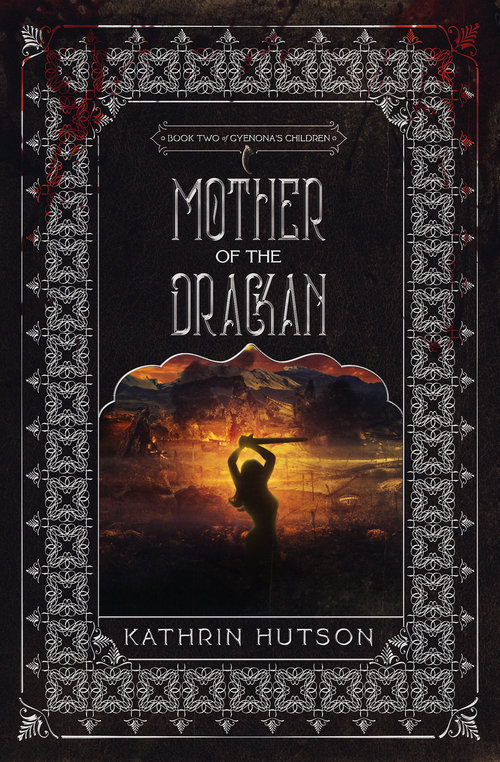
The only character name I never really had a choice about was in my Dark Fantasy duology, Gyenona’s Children. I literally had a dream about the huge black dragon—all-powerful and all-knowing—in those books, including his name and specifically how it was spelled. Igetheyr. Beyond that, my characters’ names don’t start with any meaning, but I like to think that meaning grows over the course of their stories.
- Where do your ideas come from?
Anywhere and everywhere. When I first started writing almost two decades ago, I got my inspiration from music that hit home for me. Nowadays, I’m basically just grasping onto a character, a scene, a feel, or one specific image popping into my head. I let it brew for a while before I ever touch it, but by the time I sit down to create, it’s kind of bursting to get out. I’ve never been a plotter when it comes to my own fiction, and so far, that’s been working pretty well for me.
- What is the hardest part of writing for you?
I think the hardest thing I’ve ever experienced when writing is in regard to “the big reveal”. Not all my books have one. I love to give little bits and pieces throughout a story, hints to some greater knowledge the characters later have to discover. When that discovery comes through the characters’ actions, curiosity, and drive, it’s not so hard. But when someone else has to be the one to reveal said information… that slows me down. I’m painfully aware, especially after having worked for years as a fiction editor, of how easy it is to fall into the Q&A format for scenes like these, which end up killing the scene and really not benefitting the book at all. These have to be written like a conversation, which are rarely Q&A (unless they’re interviews!) and need to be broken up by a character’s internal analysis, just a little bit of action, and some impetus for the questions to either be asked or answered in a natural way. The most mind-boggling scene I’ve ever written like this involved seven characters all sitting down together at a table in a super awkward “meeting”, where half of them didn’t know what the heck was going on, and the other half could only give vague answers and hint to “more to come”. Both parties wanted, expected, and knew different things, and have seven characters makes it pretty important not to forget any of them in the scene while this “big reveal” is underway. It’s a lot of moving parts, and it really slowed me down when writing. But it ended up working out really well.
- What do you consider to be your best accomplishment?
As far as writing goes, without a doubt, my biggest accomplishment is that I’ve managed to work hard enough and stay focused enough that I’ve now been writing fiction full-time for a living since July of 2018. So it’s still fairly fresh, but boy, is it really taking me places! All I’ve ever wanted to do since I started writing at ten years old was just to write fiction every day, nonstop, and not have to work at anything else. That is exactly what I do now. And I don’t see myself stopping that any time soon. It’s such a phenomenal feeling to be able to do what I love with such an undying passion, get paid well to do it, and watch my career grow in every aspect. I think if people realized how possible it actually is to turn what they love into what literally sustains them (like by paying the bills and then some), a lot more people would do it. Beyond that initial jump into the unknown and the “oh, crap, I’m actually doing this”, it’s a lot easier than most people think. At least, it was for me once I dove right in and gave myself permission to make this dream happen.
- What’s the best thing about being an author?
The best thing about being an author is that readers and fans will reach out to me wanting to discuss my work, my books, the characters, etc. with as much enthusiasm and excitement as I’ve always had discussing my favorite books with anyone. The fact that I can invoke that same kind of excitement and emotional response with something I’ve created is the best feeling in the world, followed closely by readers responding to my newsletters with stuff like, “I’ve read all your books. I love your stuff. When’s the next one coming out?”
- Where do you see yourself in 10 years?
Geographically, I could be literally anywhere! In the seven years my husband and I have been together, we’ve lived in Colorado, South Carolina, California, and Vermont (in that order). As far as writing goes, I can’t even fathom the number of books I’d have published and in the world in the next ten years. I’ve been averaging two a year, so… yeah, that’s a lot. Of course, I’ll still be writing. That doesn’t ever stop. And I hope to be making a livable income from the sales of my own fiction alone by that time. I’m still working on that next step.
- Have you always liked to write?
Always, always, always. For a long time, it was an outlet for all the crazy emotions and struggles of being a preteen and a teenager. Now, it’s kind of my lifeblood. I don’t remember much of my childhood before I was ten, as so many things in my life changed to lead me down a particular path when I was that age. I think all that, in addition to actually starting to write with intention and purpose, is what “woke me up” to being my own person beyond being “just a kid”. So since I was ten, yes, I have always absolutely loved to write.
- What writing advice do you have for aspiring authors?
First, yes, I’ll go with the over-repeated advice of “just keep writing”. Everybody says it, but it’s so true. It’s like exercising, or learning to paint, or figuring out how to solve a Rubik’s Cube in under 45 seconds (I could do that in college). It just takes practice. And I promise, 99.9999% of writers out there did not put pen to paper for the very first time and produce a masterpiece. I know I didn’t. My earliest work will never see the light of day, because it’s just awful. But it was practice and such an important foundation for honing my craft and building my skill.
The second piece of advice I have is that if you want to be a writer, start telling people you’re a writer (provided that you’re actually writing, of course). I remember so clearly the day I made the conscious decision to start telling people “I’m a writer”. It was about six months before my first novel Daughter of the Drackan was published. I’d felt like such a phoney, and like so many others I’ve spoken to, it seemed I wasn’t allowed to call myself a writer until I was actually published. But the day I actually said it out loud without sounding apologetic and embarrassed about it (which was definitely how I felt), I got the most amazing reaction from the people I told. Their six-year-old daughter was also a writer, and she absolutely lit up at the opportunity to tell me about the last short story she’d written. I saw myself in that kid—her passion, her love for creating with words, the consuming joy found in talking about it and being taken seriously. She told me, “I’m not a writer. I just write stories.” And I couldn’t help myself. I told her I used to feel the same way and that she was absolutely a writer and should tell everyone the same thing and never stop creating those stories. I hope she still is.
And finally, if writing is what you really want to do and where you passion lies, don’t let anyone or anything stop you from doing it. No matter what anybody says, what feedback you get, how many rejection letters you received (I have quite the impressive collection, all for books that later became bestsellers…), keep going. Nothing happens overnight, but if you want it, you’ll get it.
If you didn’t like writing books, or weren’t any good at it, what would you like to do for a living?
- Well, then I’d want to be a paid book reviewer and make my living that way. I already read enough as it is. Why not making a living from it? The closest I’ve gotten to that is by being a fiction editor. But I’d be so down to read both for fun and for money without having to pick the book apart on a line-by-line basis.
Do you read reviews of your book(s)? Do you respond to them, good or bad? How do you deal with the bad?
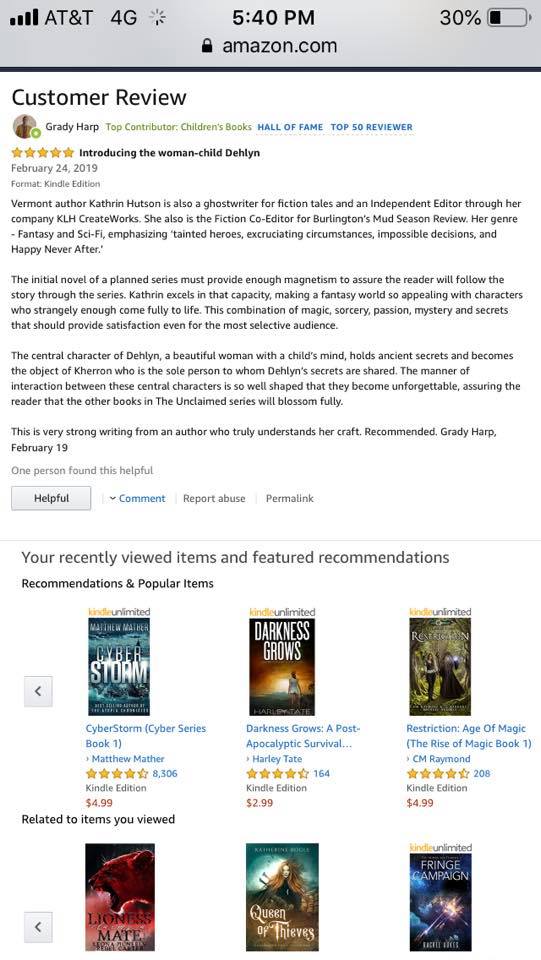
Of course I read my reviews! I’m still hoping for more, honestly. I don’t respond to them, though. People leave their reviews mostly just to provide their opinions. Sometimes it’s too tear somebody down, which is unfortunate, but most of the time, that’s not the case.
Bad reviews are inevitable. Thankfully, I only have a few, and I haven’t received any (yet… knock on wood) lower than 3 stars. I did have a reader email me once, saying that I charged way too much for my books that were way too short and he didn’t have time to be jerked around by an author whose only focus was cheating people out of their money. Yeah, woah. But I did reply to his email, because that was private and addressed specifically to me. I apologized for any frustration my book lengths and prices might have caused, though I did ask what his preferred lengths and prices were (mine are all 70,000-100,000 words and priced between $0.99 and $2.99 for ebooks). And I offered him the next book in the series for free. As it turns out, this same reader sent me another email with a gushing apology; apparently, he’d written this email to the wrong author, having been so irate that he hadn’t stopped to double-check the email address. I’ve found glowing reviews from this one reader on all my works since then, and he still emails me to check in and rave about my newest books. That was a pretty amazing feeling, once I got over the initial shock of his first super angry email.
- What is your least favourite part of the writing / publishing process?
Marketing and promotion. Those are my least favorite parts, simply because they take time away from my writing. But they’re so important, and I have to do them.
- Can you give us a few tasty morsels from your work-in-progress?
Oh, yes I can! This comes from Chapter 1 of Imlach Fractured, Book 1 in the Vessel Broken series. And boy, was I so excited to write this!
When she’d first come to the temples at Arahaz—a criminal of Gethlem and then no more than a slave purchased by her mistress—Rahlizje’s hair had been all but shorn from her head. Now, it had grown again almost to its former length, as had her role within the order. With that, so too had her ambition grown, nurturing her hunger for things far greater than pilfering coin and useless trinkets from unsuspecting city-dwellers and traveling merchants. Rahlizje herself had chosen which small bones of her predecessor might add the most power to the High Summoner’s vestment. Physically, they added very little weight; the strength of their imbued meaning, however, could be felt every time Rahlizje donned the visage of High Priestess forged with steel and fire and blood. The smallest bone of a forefinger; the sharper tip of a hard, pale toe; the jutting curve of Yuhltse’s jaw, broken from the remains of her skull, forever serving as a reminder of the woman’s dark smile—all these held remnants of her predecessor. They were talismans of the things Rahlizje had learned from the woman and of what had been done to them both. Today, she carried them with her in the headdress that had once belonged to Yuhltse.
Now, the Priests of Imlach belonged to Rahlizje. Now, the gateway to Imlach—the Sleeping Darkness—was hers, and today, she meant to open it.
Her bare feet whispered across the stone floors smoothed by so many centuries of the same footsteps. The indelibly straight path from her chambers to the corridor, across the cavern, and to the single open space among the circle of her eighteen disciples only heightened the prescience of this ritual. She did not have to adjust her course, to gauge the distance, to anticipate the way her presence filled the room and therefore restructured it. All this had been performed for her already, her disciples having prepared this temple for readiness while Rahlizje had prepared herself to guide them.
She stopped at her place within the circle, feeling eighteen pairs of eyes on her without seeing any of them from behind the darkened hoods. Slowly, before the small stone tray laden with the necessary items for their summoning, she lowered herself to her knees. Her black robes pooled out around her onto the cold stone floor. Staring at the flaming coals within the center brazier, she waited. Blue-tinged smoke wafted up from the smaller pewter dishes placed around the brazier, all of them burning the acrid tar made from the bleeding sap of Imlach’s Finger. Arahaz boasted only one of these ancient trees, which had stood testament to the Sleeping Darkness’ return for unknown centuries, providing the order with the gateway Rahlizje meant to claim. So long ago, that smoke had burned her nostrils, bringing her to what she’d thought back then was the brink of madness. Now, it merely soothed what little doubt she still had and pulled her awareness from her body like a single, unending breath. She felt everything within this cavern. She was everything. She would be more.
“My flesh for the Kalibuun.”
The first sworn oath came from her right. It sounded like Zemor, and when the disciple standing beside Rahlizje moved in front of her kneeling figure, she knew it was him. He lowered his head briefly to press his lips against the Disk of Kalibous fixed just off-center upon the headdress. His scent washed over her, mingled with the pungent sharpness of the burning sap. Rahlizje steadied her head against the soft, sure pressure, and then it was gone.
Zemor’s robes vanished from her field of vision, giving way to the brazier’s hungry glow. The ring of the High Priestess’ disciples shifted; Zemor filled the empty space on the other side of Rahlizje, and the circle completed itself again to start anew.
“My flesh for the Kalibuun.”
- Where did your love of books come from?
It started with reading. For as long as I can remember, as long as I had a book with me, I was never bored. Ever. And I read so much. More than anyone, I think, my dad helped bolster this love of books. He doesn’t write fiction at all, but the man reads a full-length novel in two hours or less, and he has an eidetic memory on top of that. So he really doesn’t ever forget anything he’s read (these days, he still has to read a passage or a page first before remembering the entire book). But he was always giving me books he’d read as a kid and telling me how much he thought I’d love them. A lot of them were classics. He gave me his childhood copy of Robinson Cruesoe for my tenth birthday, which was one of the best presents I’d gotten that year. But I had no lack of exposure to reading, for sure. And my dad would take us to Barnes & Noble almost every day after school for a snack at the café and 2-4 hours of reading. We went to that bookstore like other people go to the library, just to read what was available. My dad would go through 2-3 books in that time, I’d go through most of one or maybe a whole book and start a new one. And if I got really into it, I brought my spare change with me.
Do you have any favorite authors or favorite books?
Stephen King, specifically The Dark Tower series; Jacqueline Carey; Diana Gabaldon and her Outlander series; George R. R. Martin; Neil Gaiman; John Irving.
- Of all the characters you have created, which is your favourite and why?
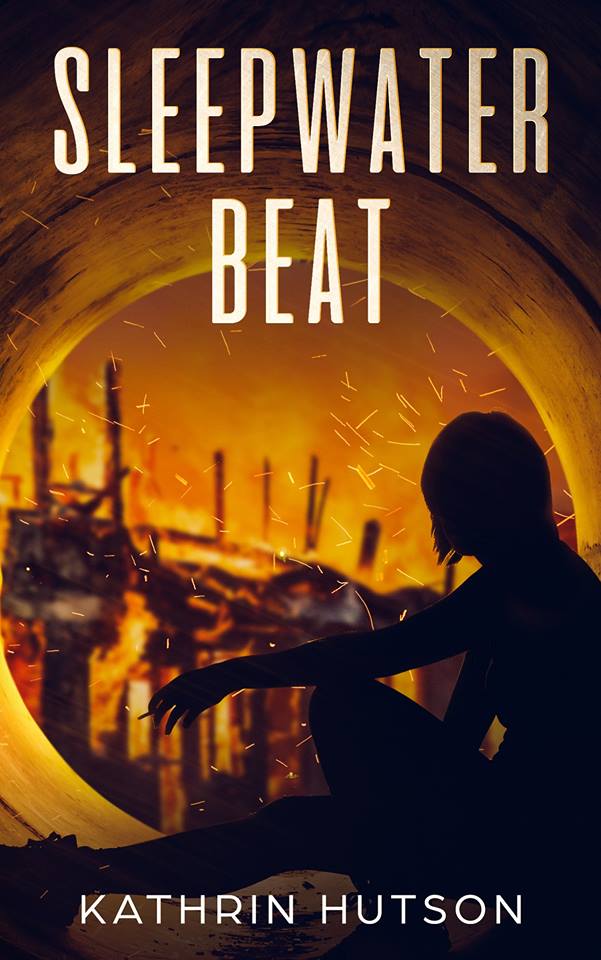
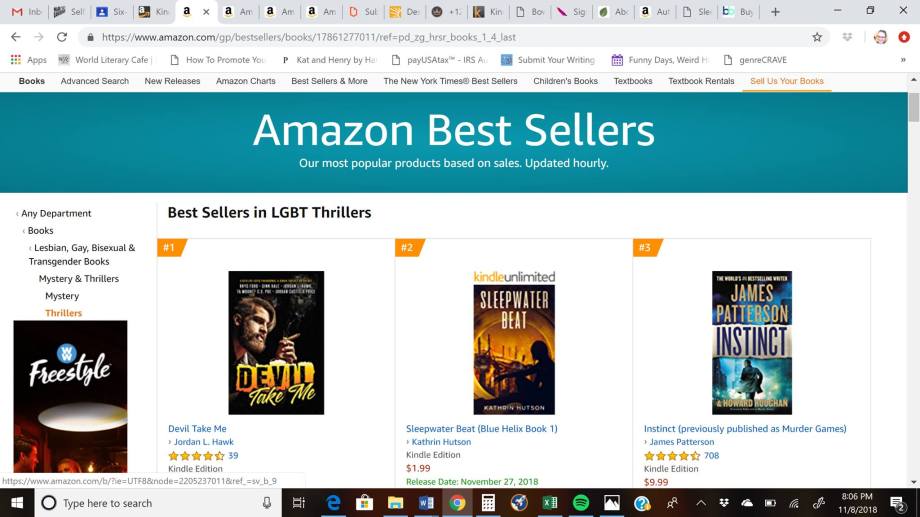
Oh, jeeze. That’s so hard. Three-way tie, maybe? That would be: Keelin from the Gyenona’s Children duology (fierce, brutal, feral, no-apologies, doesn’t need anyone to save her, loyal, vicious, terrifying… the list goes on); Aelis from Sacrament of Dehlyn (a grieving mother who’s been through the worst of the void, just like Kherron, who also doesn’t need a savior; she’s intense, quick to anger but just as quick to forgive and to act compassionately; come on, she turns into a bear; quick-witted with a biting sense of humor); and Karl from Sleepwater Beat (quiet, observant, proud when it counts and humble in the best way; wrongly convicted of murdering his wife; running from the mistakes he never made; redeeming himself in being for Leo, the main character, what she never had as a sort of mentor figure). I can’t say much more than that about any of them, because that would totally count as spoilers!
- Does writing energize or exhaust you?
When I’m in the actual process of writing, it absolutely energizes me. I get in the zone, and then I’m just going, going, going. The standing desk helps like nobody’s business. I’m literally writing in a “power position” for 1-2 hours at a time before I sit for 5-10 minutes just to give my legs a break. Then I’m back at it. I’m also convinced the standing desk has been helping me get in better shape ha!
At the end of the day, though, when I’ve written so much, I get totally drained. Granted, immediately after writing, I’m still riding “the high” for maybe twenty minutes, and then I feel like I just ran a marathon. But it’s awesome. I love that writing doesn’t have to be sedentary (and maybe shouldn’t be, all the time), and I love that it makes me feel almost as good as a fantastic workout or a hike through the woods, both of which I try to get in as often as possible.
- What is your writing Kryptonite?
Hearing someone else’s conversations while I’m writing. Especially phone conversations. My husband’s “whisper” could wake the dead, so you can imagine the effect his normal speaking voice has on anyone and everyone. It’s impossible not to hear him when he’s home unless I have my headphones in with some instrumental music in the background. And by instrumental, I just mean no lyrics. The lyrics are a conversation, too. Honestly, I write to any genre of instrumental music. Dubstep and funk have been my recent go-to work vibes or the last few months. Helps keep the energy up, too.
- Do you try more to be original or to deliver to readers what they want?
I am always trying to be original in everything I do—taking different angles on old tropes, adding bits and pieces of what I know readers love but not making them my focus. If my heart’s not in what I’m writing under my own name, what’s the point of writing it? I know my work isn’t for everyone. No author can please all readers all the time. But so far, my existing and new readers have been picking up what I’m putting down. More often than not, the response is “a new take on magic” or “a strong female lead like I’ve never seen before” or “revolutionary in the seamless weaving of x, y, and z”. I love that part. Being original is fantastic, as long as that originality still falls within certain, much broader constructs of the specific genre overall. Otherwise, I think, readers feel like they’re being tricked into reading something different than what they were expecting.
- What other authors are you friends with, and how do they help you become a better writer?
I am friends with so many other authors, I can’t even begin to list them. A few of them are on my street team and act as my alpha readers as well. They get pieces of my work as I’m still in the process of writing, and these people have been instrumental in helping me polish my work before publication. They’re authors and readers, just like me, and a few of them are even editors, just like me. So I get feedback all around from multiple angles, and I couldn’t have done what I’ve done so far without friends like this with just as much passion for helping other authors—and reading good books—as I have.
- If you were writing a book about your life, what would the title be?
I love this question. I’ve already “started” something like this (for way, way, way far in the future). The working title now is On the Edge of Flying. Definitely on the back burner in bits and pieces, and that’s a whole different story in terms of some of the things I’ve already experienced in my short life, which a lot of people respond to with surprise when I hand out bits and pieces. One day, On the Edge of Flying will be out there, too.
- Where can your fans find you and follow??
Fans! I can be reached all over the place.
Kathrinhutsonfiction.com
author@kathrinhutsonfiction.com
facebook.com/kathrinhutsonfiction (see the pattern, here?)
Instagram: @kathrinhutsonfiction
Twitter: @klhcreateworks
And… I think that’s it. I absolutely love getting emails from readers, and I respond to every single one of them individually. Because I’ve written plenty of fan emails to authors I love, and it takes a lot of guts 😛
Thank you for taking your time to do this interview ❤️
Thank you so much for having me in for this interview! -Kathrin Hutson
 My Books-My World