MY INTERVIEW WITH AUTHOR KAREN GARVIN
What’s your name and what genre would you consider your books to be?
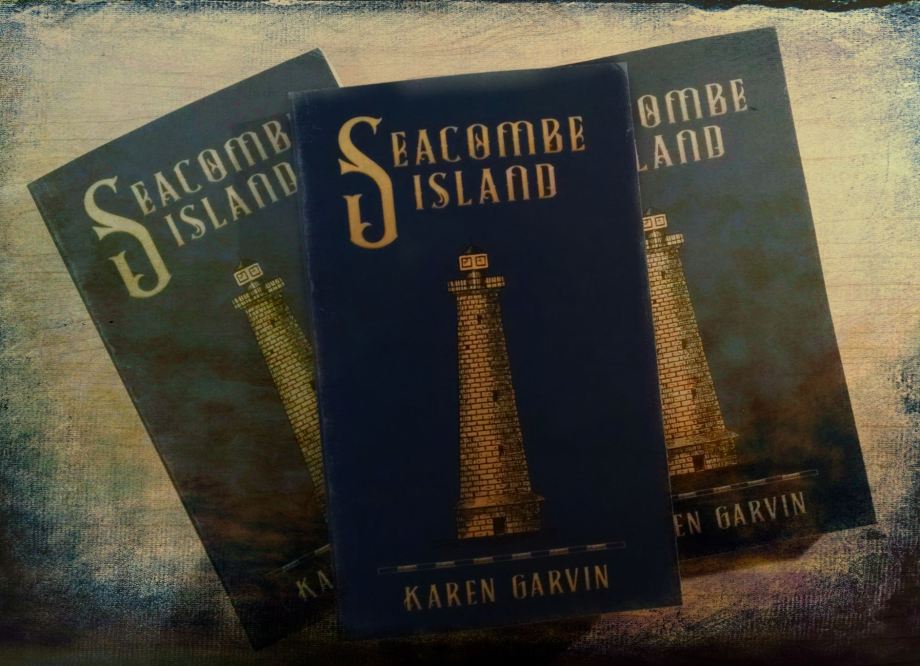
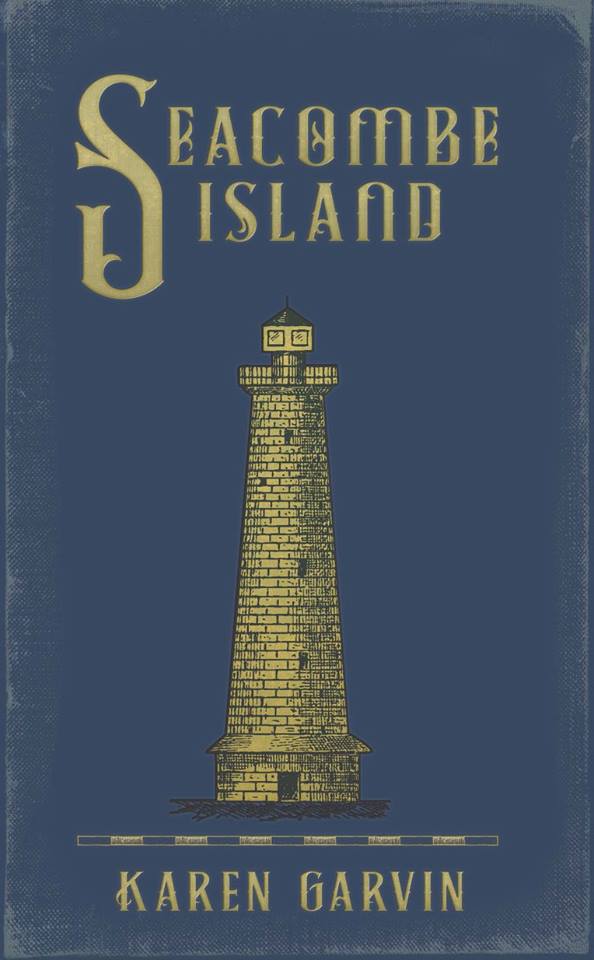
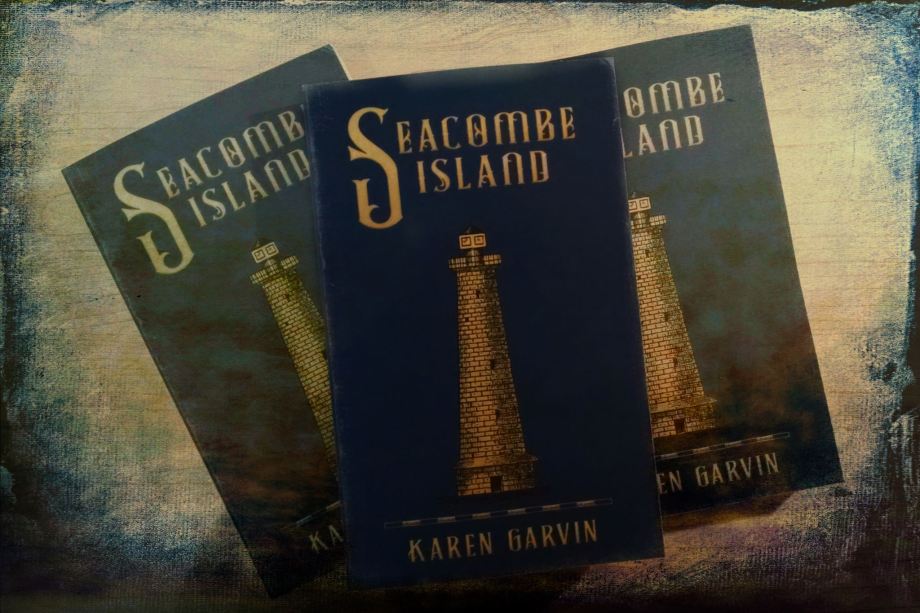
My name is Karen Garvin. I consider my novel Seacombe Island to be Steampunk, which is Victorian science fiction, a kind of science fiction/alternative history, although I’m adding some mystery elements to the mix. My short stories tend to be science fiction and horror, which is strange because I don’t read or watch horror!
Tell me about your book. How did you come up with that (story, angle, idea)?
Seacombe Island began as a NaNo project in 2011. I tend to be a pantser, so I just started writing on November 1 and kept going. I remember not telling very many people about the novel because I wasn’t sure I could do the 50,000 words, but I managed to go the distance. I wanted an adventure story, and I’ve always been keen on James Bond and Jules Verne stories, so quite a bit of that influenced my setting, although my protagonist starts out as an average guy caught up in events.
How did you get interested in writing this particular genre (historical novels, mysteries, sci-fi, children’s books, etc.)?
I’ve always loved adventure, science fiction, and history, and finding a way to roll them all together into one package is pretty neat.
What kind of research did you do for this book?
Well, I have a master’s degree in history with a focus on early modern Europe, so I’m fairly fluent with the Victorian era. But I remember looking up a lot of words – “sofa” comes to mind. Did they call them sofas, or divans, or something else? I spent a lot of energy chasing that one! Because the early part of the novel is set in London, I was worried about describing or naming particular places, so I pretty much wrote around that. I don’t think avoiding place names detracts from the novel and reader response has been positive. I didn’t get a chance to go to London until after the book was written, but between reading about the city and its history, having lived in England for a few years as a child, and asking other writers on online writing boards about the city, I pretty much got the answers I needed.
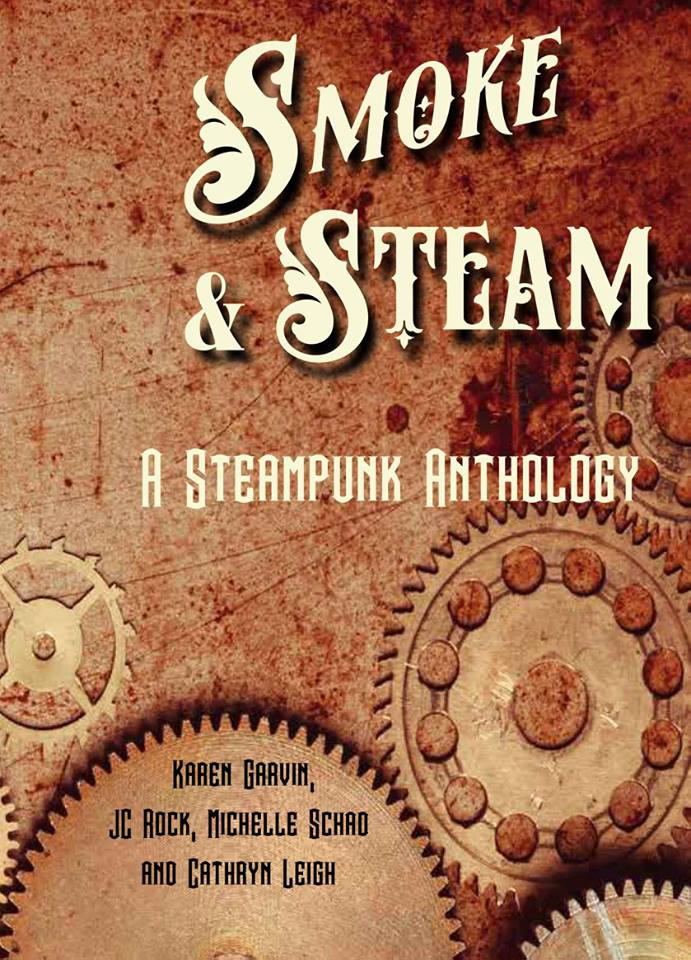
I also did some research on ships, as one of the main forms of travel in the novel is the Yare Dragon, which is a hybrid sailing ship and steamship (those really existed). I’ve also done historical research on airships for history classes, so even though there isn’t an airship in Seacombe Island, one features in my short story “Hekatite” in the Smoke and Steam anthology. I also have a growing collection of authentic antique airship postcards for inspiration!
Can you tell me about your Series?
Seacombe Island is the first in a series, and the second novel was drafted during NaNo 2012. But it was shelved while I finished graduate school (that was also the reason Seacombe Island took so long to get done). During my final editing of Seacombe Island a lot of the backstory changed, so book number two needs a lot of work.
Do you have a favorite book out of this series?
Not yet!
Where did you get the inspiration/idea for your series?
Sir Arthur Conan Doyle’s Sherlock Holmes stories, Jules Verne’s adventures, and Ian Fleming’s James Bond feature prominently as inspiration. I was also an avid Star Trek, Time Tunnel, Wild Wild West, and Voyage to the Bottom of the Sea junkie. Oh, and I almost forgot – Johnny Quest! Bring on the sea monsters! Yeah, and it never bothered me that the shows were pretty much all guys because I was always confident I’d fit right in on any adventure!
What kind of research did you do for this book?
For the second book I used the research from the first book.
Was it always meant to become a series?
No, I had no idea it would go that way. But by the last chapter of first book it became obvious that it was more of a beginning than an end.
What’s a typical working day like for you? When and where do you write? Do you set a daily writing goal?
I work full time as a copyeditor and I’ve been so busy in the last year and a half that I practically do the work of two people. My writing time? Well, I’ve been plagued with insomnia for some time (stress-related), so maybe two or three nights a week I sit down at my computer at midnight and work for a couple of hours, and then I go to bed around 4 a.m. and get back up at 8 for work. It isn’t ideal, but it’s the only time that I can be reasonably sure I won’t be interrupted because once the work day starts my mind is pulled a zillion directions. I used to be able to write at lunch, but these days I play Guild Wars 2 during my lunch break to blow off stress.
Do you have a new book in the making and if so, what’s the name of your upcoming book?
I was going to skip NaNo 2018, but I was talked into it. So, without any preparation I’m working on a Steampunk noir mystery. It has a working title of Death at Altitude but that will probably change. I’d also like to finish Return to Seacombe Island (NaNo 2012) and I have two completed drafts that I’d like to edit. One is a dystopian YA novel called Waist Removal that focuses on two teenage girls in a world where obesity is virtually a crime and “offenders” are sent to fat camps; the other is a noir mystery in search of a plot.
How important are character names to you in your books? Is there a special meaning to any of the names?
Sometimes I just like the sound of a name, but I’ve also tried to pick names that have meanings, such as “wise” or “bright.” I spent quite a bit of time researching names for the Hekate orchid that features in Seacombe Island, but the name Thomas Ashton just sounded like an average guy’s name and that’s what I wanted. If you read the book, though, at the end of the first chapter his last name becomes prophetic. That was pure serendipity and not something I planned, but I took advantage of it. I won’t spoil it here, so read the book!
Where do your ideas come from?
That’s what I’ve been asking myself all day … I’m sure a lot of them are influenced by what I read and watch on TV, but I can’t point to a single source for any of my ideas.
Is there a genre that you’ve been wanting to experiment with?
I took a shot at writing noir mystery for NaNo 2016, but I didn’t quite come up with a working plot and then the characters took the novel in a direction I hadn’t anticipated and it was something I didn’t want to follow at the time. I’m hoping the Steampunk/noir mashup I’m working on this year will be a successful first draft.
What is the hardest part of writing for you?
Getting started. Seriously, it’s sitting down at the keyboard and starting to type. This plagued me during my undergraduate work (I returned to college in 2003 at age 45) and I used to actually squirm in my chair and tell myself that I couldn’t do the work. But I did. That’s why NaNo was so important to me — I’d never written something so long and finishing it proved that I could go the distance. It doesn’t get easier to start a project, but the nagging gremlin of doom (inner editor) has retreated.
What do you think of book trailers? Do you have a trailer or do you intend to create one for your own book?
I’d never really watched them (I’m more of a review reader because I read a lot of academic work and general nonfiction), but one of my coauthors at Corrugated Sky, Michelle Schad, made trailers for all of our books. They are a lot of fun to watch and now I want to work with video.
What do you consider to be your best accomplishment?
Finishing my master’s degree.
What’s the best thing about being an author?
Creating worlds, exploring “what if” scenarios, and being able to express myself.
Where do you see yourself in 10 years?
This is so hard to answer! I absolutely want to live somewhere besides Maryland so I can get away from the heat and humidity. I like snow, I just don’t want to be buried to my eyeballs until spring. I will continue writing and I want to make the publishing company I co-own a roaring success. I want a bit of land – enough that I can open my windows and not hear my neighbors, and with enough clear skies for my telescope. I also want to travel more. I’ve been to London and Edinburgh and Paris (one day) but I want more! Maybe on a book-signing tour!
Have you always liked to write?
Yes, I always wrote. I can remember one four-line stanza from a poem called “November” that I wrote when I was 8 or 9, and in sixth grade I wrote a book about a race horse. Unfortunately my teacher sent it off to a publisher (really, it was not worthy) and I guess it went into a circular file. I’d rather have kept it.
What writing advice do you have for aspiring authors?
Writing is about communicating. Don’t blow off opportunities to improve your spelling and grammar and don’t dumb down your work because you think readers can’t or won’t look something up. Some will, some won’t, but as they say, you can’t please everyone.
If you didn’t like writing books, or weren’t any good at it, what would you like to do for a living?
Photography or graphic design. Actually I’ve sold photos at craft shows and I owned a graphic design company. Another area that would interest me is interior design.
Do you read reviews of your book(s)? Do you respond to them, good or bad? How do you deal with the bad?
I do read reviews and it’s interesting to see what people say or what their favorite part of the book was. So far none of my reviews have been negative. From what I’ve seen with other authors, responding to a negative review can antagonize readers more than it helps your image and it may turn a single negative review into a mile-long troll-a-thon.
What is your least favourite part of the writing / publishing process?
Marketing. It requires so much effort and it is ongoing. Sometimes I just don’t have the energy to check Facebook, tweet, update my author page, or write blog posts.
What are you working on now?
I have a NaNo 2018 draft in progress, but I’m also working on several articles for an open-access textbook on the history of science and technology. Did I mention my nonfiction? I’ve written more than 100 encyclopedia articles. Someday I’ll dust off my master’s thesis and turn it into a book (it’s about Victorian detectives and detective fiction).
Can you give us a few tasty morsels from your work-in-progress?
Amanda Grace Kelly works as a mechanic aboard the airship Silver Drake. En route to Tharsis, one of the major cosmopolitan areas west of the Highborn Mountains, the captain is found dead in his cabin with his throat slit.
Once the ship reaches Tharsis, Grace must report his death to the guild and to the authorities, who immediately detain her and the Silver Drake‘s small crew on suspicion of murder. There are only five people who could have killed Captain Wensel, and an earlier argument with the captain over wages makes Grace the prime suspect.
Grace’s cousin (who happens to share her middle name) comes to the rescue. Helen Grace Emory is bright and willing to go all out to defend her cousin, but she soon finds herself being stalked by a mysterious man in a red cloak. Who is this man? And why is he stalking Helen?
Why did you choose to write in your genre? If you write in more than one, how do you balance them?
I’ve always been drawn to history, science fiction, and mystery, so it’s natural that I want to write those kinds of things. Oddly, my short stories tend to be horror (not slasher or gore) and I don’t know why I write them.
Where did your love of books come from?
I learned to read before I went to school and I was always happy to have a book in my hands. Hop on Pop was my first book, and where I lived there was no library but we had a Bookmobile that came every week. What a wonderful thing the Bookmobile was!
Do you have any favorite authors or favorite books?
I like the original Sir Arthur Conan Doyle Sherlock Holmes stories as well as many of the newer stories written by other authors; Katherine Kurtz’s Deryni series; Benedict Jacka’s Alex Verus series; and I’m listening to the audiobook version of the J.K. Rowling’s Harry Potter series.
Of all the characters you have created, which is your favourite and why?
Edward Gray is my favorite character from Seacombe Island because he’s a complicated person. He’s actually a bit of a jerk (okay, a lot!) because he’s quite manipulative and he uses the main character, Thomas Ashton, for his own benefit. But he’s also endearingly human. His character was a lot of fun to write and I let him just do whatever he wanted.
Does writing energize or exhaust you?
Both. Mentally I want to keep exploring my writing options, but physically I get drained by typing and sitting at the computer so long.
What is your writing Kryptonite?
Falling into plot holes. I tend to write off-the-cuff, so I don’t always have the background details sorted out before I wade in and I end up having to fix things so they make sense. But if I do a complete outline before I start writing, it just gets mired in details and the story goes nowhere because I try too hard to stick to the outline.
Do you try more to be original or to deliver to readers what they want?
I write what I want to write, because that’s where my passion will be, and that passion will come through in the story and give it life. I’m not trying to be snobbish, but I know that not everyone will like my work and that’s fine. But readers want something authentic (even if it’s fiction) and telling them what they want to hear makes it their story, not my story.
What other authors are you friends with, and how do they help you become a better writer?
My coauthors at Corrugated Sky and a couple of other people I’ve met through NaNo and through university have given me a lot of valuable feedback over the years. I also belong to an online writing site called Scribophile and I got some excellent critiques of the early chapters of Seacombe Island from the forum members. Help tends to come in several forms: feedback about the plot, pacing, etc.; general chat about the writing process, including crying over spilt milk; and getting prodded to push myself a little farther than I had intended. I wasn’t going to do NaNo 2018, for instance, until a little friendly arm-wringing put me behind the keyboard.
If you were writing a book about your life, what would the title be?
I’m assuming you mean a true-life story, like a memoir. Well, it wouldn’t be a happy one. I’ve thought about doing a memoir but I don’t think I can handle dredging up some of my past experiences. Here’s what I’d call it: Just another Sacrifice on the Altar of Political Correctness. Let’s just say that I didn’t grow up in a nice place and leave it at that.
What question have you always wanted to be asked in an interview? How would you answer that question?
I don’t know! I suppose I’d like the interviewer to ask about my thought processes for writing plot, in which case I could answer by talking about some of the research I do and some of the fun stuff I come across. I’m more keen about talking about what I do and where my interests lie, rather than who I am or where I come from.
Where can your fans find you and follow??
I have a blog called Focal Plane where I write about photography, writing, and life. The link is https://ksgarvin.wordpress.com and readers are welcome to leave comments and subscribe to the blog or follow me on Twitter @ksgarvin. My Facebook author page is at https://www.facebook.com/Karen-Garvin-221593375278084/ and the Corrugated Sky page is https://www.facebook.com/corrugatedsky/. I have a Goodreads author page is at https://www.goodreads.com/author/show/16051925.Karen_Garvin.
Thank you for taking your time to do this interview ❤️
 My Books-My World