MY INTERVIEW WITH AUTHOR EMMA HIBBS

What’s your name and what genre would you consider your books to be?
My name is Emma Hibbs and I write under the name E. C. Hibbs. All my books are YA fantasy, but literally anything within that genre goes – in the past I’ve written historical fantasy, paranormal, high fantasy, steampunk, and gothic fantasy to name a few.
Tell me about your book. How did you come up with that (story, angle, idea)?
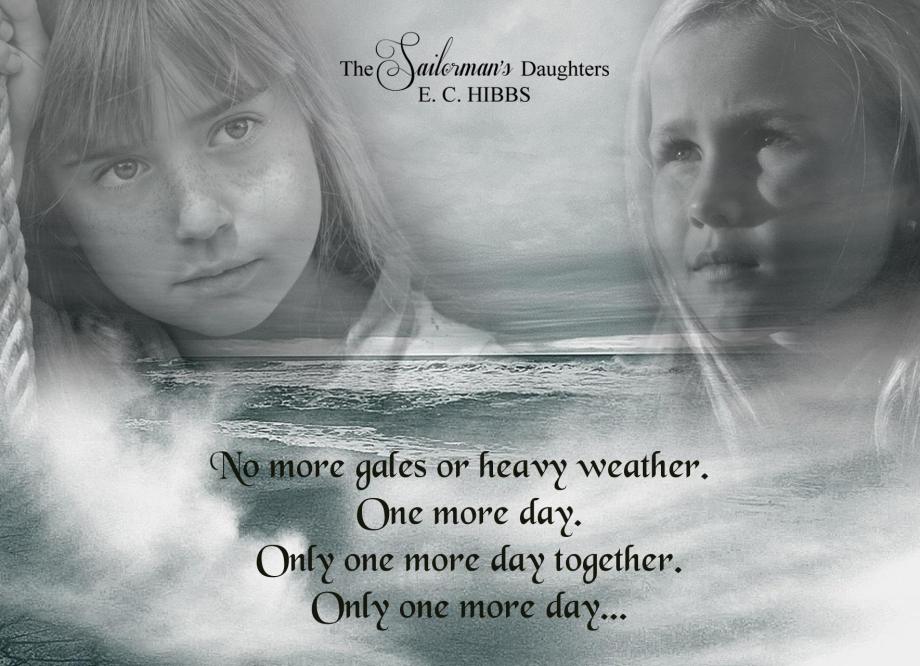
My most recent novel is called The Sailorman’s Daughters, and it tells the story of a young girl who discovers she has a mermaid half-sister from when her father was away at sea. It was inspired by tales of mermaids who were said to lure sailors with their singing – I found myself wondering what would happen if a sailor took a mermaid lover but then managed to return home to his old family. The story very quickly developed from there. I wanted to explore how dysfunctional and even abusive such an experience would make a family, how secrets would haunt them, and how the innocent children would find escapism and acceptance in each other’s company.

How did you get interested in writing this particular genre (historical novels, mysteries, sci-fi, children’s books, etc.)?
I’ve always been drawn to fantasy and speculative fiction and how they can act as a backdrops for practically any kind of story; it truly allows my imagination to soar. And I like writing YA because there are so many interesting angles to be explored with characters in that age group – plus it can appeal to both children and adult readers for different reasons. For me, it’s about a good story first and foremost.
What kind of research did you do for this book?
Since The Sailorman’s Daughters is set in Cornwall in the 1830s, I did a lot of reading on time period and place; I wanted to capture the environment of a pre Industrial Revolution fishing village, surrounded by a dramatic coastline and weather that can change on a whim. I visited Cornwall to get a feel for the visuals and culture, and tried to incorporate some aspects of Cornish maritime stories in there as well, especially the legend of the Mermaid of Zennor.

What’s a typical working day like for you? When and where do you write? Do you set a daily writing goal?
My bedroom doubles as my office so I tend to write in there – I tried writing in a coffee shop once and couldn’t concentrate at all! I only write one book at a time, but I’m always working on about 7 more in my head, and for each one I do a lot of pre-work to make sure it’s as ready as I can get it. When it’s time to be born, I work solidly on the manuscript for about a month. I try to write at least one chapter per day, and usually in the evening because I’m a real night owl, but if I have no commitments during the day I’ll literally do a 12 hour writing binge!
Do you have a new book in the making and if so, what’s the name of your upcoming book?
I’ve recently completed a new series called The Foxfires Trilogy, inspired by my times living in the Finnish Arctic. However it has no release date yet because I’m between publishers and looking for the best route to bring it to my readers.
How important are character names to you in your books? Is there a special meaning to any of the names?
Not all my characters’ names have backstories, but some do – most of the time it’s as a nod to a concept or source which played a part in the story’s creation. For example, in The Sailorman’s Daughters, Connie’s surname (Marner) is the Cornish word for sailor or mariner. More than anything, I like picking names which fit the context and setting of the story so they don’t jolt the reader too much – if I can get a bit of meaning in there, it’s a neat bonus for anyone who wants to read my author notes!

Where do your ideas come from?
I can never pin down the exact sources of my stories, but I’m generally inspired by dreams, folklore from around the world, philosophy, music, nature, and my own experiences. My favourite question to ask in regards to the creative process is “what if…?”
What is the hardest part of writing for you?
Editing. I’m very ruthless and don’t cut myself any slack when it comes to polishing a story, but it’s like taking a knife to the thing you’ve spent so much time and energy creating. It never gets any easier; you just have to let your skin get thicker every time it needs doing.
What do you think of book trailers? Do you have a trailer or do you intend to create one for your own book?
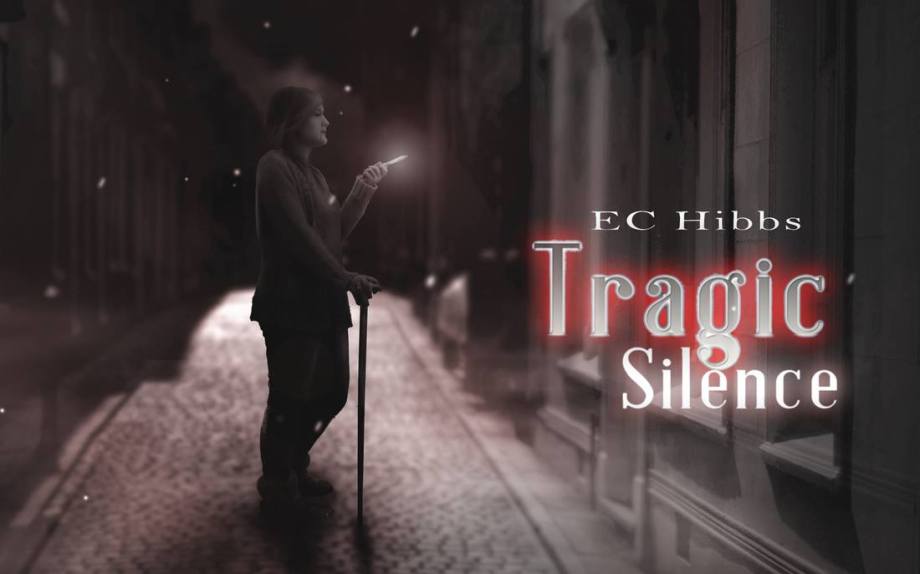
I really enjoy them. The artistry behind some of them is beautiful and they can really help in adding to the feel of a story. I have trailers for a few of my books and they have steadily gotten better through the years as I’ve mastered more advanced editing programs.
What do you consider to be your best accomplishment?
I was overjoyed when Blindsighted Wanderer, my debut, was nominated for the 2012 Midwest Independent Publishers Association Award; but my highlight so far has probably been returning to my old high school earlier this year and speaking to the aspiring writers there. When I was a teenager I would have loved the opportunity to have a conversation with an author, to learn about the whole process of writing professionally, and it was wonderful to actually be in that position myself to give something back.
What’s the best thing about being an author?
Being able to share my visions and creations with the world, and when total strangers come to me and tell me how much they enjoyed it. That is reward and bliss beyond words.
Where do you see yourself in 10 years?
I’d like to think that I’ll be with a new publisher and continuing to bring my books to the world – each one different but you’ll know that you’ll always get a good story, whatever it is. I’d like to move into making my career completely freelance too so I can work from anywhere.
Have you always liked to write?
I can’t remember a time when I wasn’t writing! It’s always been my primary way of expressing myself. Even though the story itself is what people see, each one reflects something very deep and personal for me.
What writing advice do you have for aspiring authors?
Don’t stop. Don’t stop writing, don’t stop reading, don’t stop learning, don’t stop experimenting, don’t stop striving to be better. But most of all, don’t stop believing in yourself.
If you didn’t like writing books, or weren’t any good at it, what would you like to do for a living?
My academic background is actually in animal behavior and wildlife conservation. I got my Master’s degree in 2016 and I’ve worked hands on with over 80 species – everything from rabbits to rhinos! So I’d probably be putting that to good use and working in marine and/or arctic environments, which are what I specialized in. But I also work as an artist and graphic designer alongside writing, so I’d like to think I could always fall back on that if the writing muse were ever to leave me!
Do you read reviews of your book(s)? Do you respond to them, good or bad? How do you deal with the bad?
I feel it’s important to read reviews – good ones are such a confidence boost and it’s wonderful to know someone has enjoyed your story that much. But even though bad ones can be upsetting, it’s vital to remember that in most cases they are not a personal attack on you – and if, for whatever reason, they are an attack, it says more about the reviewer than about you. After allowing time to cry, I try to thicken my skin again and see if there are any valid points which I can use going forward. It’s impossible to please everyone, but there will always be more people who enjoy your work than ones who don’t.
What is your least favourite part of the writing / publishing process?
Formatting is something I never look forward to. It tends to be the very last thing on my to-do list for a book. Give me cover design any day over that!
What are you working on now?
I don’t have any release dates for new novels, but I’m taking part in a fairy-themed charity anthology from Dreampunk Press which will be released next year. My story is set in Victorian London and follows a flower fairy who accidentally has her wings cut off by an elderly clockmaker. She finds herself trapped in a world without nature, and the two of them discover that while they are at odds on the surface, they are more alike than they first thought.
Why did you choose to write in your genre? If you write in more than one, how do you balance them?
I always need to have some kind of fantasy or speculative element to act as a catalyst or backdrop, but besides that, it’s all about the story. If the best way to tell it is steampunk, high fantasy, or paranormal, then I trust my instincts and let myself go out of my comfort zone if need be. Each genre brings something new to the table and lets me look at things in different ways, so I don’t see it as a balancing act, but allowing the story to breathe the way it needs to.
Where did your love of books come from?
My mum was always reading to me and encouraging me to read from a very early age, and I quickly became fascinated by how vividly books could transport me to new worlds and expose me to new ideas. Most of my birthday and Christmas presents tended to be books. I remember confounding my teachers with some of things I used to read. For a time in school I was called Matilda because I was never without a book!
Do you have any favorite authors or favorite books?
My favourite series of all time is the Chronicles of Ancient Darkness by Michelle Paver, but I also adore Philip Pullman’s His Dark Materials, Jane Eyre by Charlotte Bronte, and anything by Neil Gaiman.

Of all the characters you have created, which is your favourite and why?
I have a real soft spot for Merrin, the water nymph queen from Blindsighted Wanderer – her character arc was a joy to behold as I was writing it. She has to juggle the new responsibility of queendom with trying to stay alive and coming to terms with her past, and it all relies on being able to let go of hatred and vengeance – but there’s a real fragility to her as well. I love writing meaty and multi-layered characters in all aspects, but Merrin still steals my heart. Maybe because she was from my first published book.
Does writing energize or exhaust you?
It fills me with energy! Writing is always such a thrilling and wonderful experience for me, but because I work so intensely during the first draft, I have to remind myself to keep up the pace so I don’t lose my grasp on the story. I need to plan that period well so I know I’ll be able to devote enough time to work on it solidly. I won’t deny the rush of relief after I’m done though – it’s like reaching the top of a mountain and taking in the view: exhausting but worthwhile.
What is your writing Kryptonite?
Copious snacking, especially on chocolate. I can get so involved with the writing that I forget to eat a proper meal until the evening!
Do you try more to be original or to deliver to readers what they want?
I personally prefer writing original stories – the kind I’ve always wanted to read and very rarely found. I don’t write books to cater to what’s popular at the time, but rather to deliver a good story first and foremost. I know there are only a certain number of stories in the world, but the ways of telling them are where the creativity lies, and that’s what I love to explore. I don’t want to be “the new J. K. Rowling” or write “the next Hunger Games” – I want to be the first me.
What question have you always wanted to be asked in an interview? How would you answer that question?
Which Hogwarts house are you in?
And I’m a proud Ravenclaw. Bookish, unapologetically individual, and more than a little bit loopy!

Where can your fans find you and follow??
The wild Emma is usually found on Facebook (www.facebook.com/echibbs), in the Batty Brigade Facebook Group (https://www.facebook.com/groups/396619150736890/?ref=br_rs), and on YouTube (www.youtube.com/echibbs), but I also hang around Twitter (www.twitter.com/echibbs) and Instagram (www.instagram.com/e_c_hibbs) on occasion. You can also find everything about me and my creations by stepping through the Violet Door (www.echibbs.weebly.com).

Thank you for taking your time to do this interview ❤️
 My Books-My World